Personalized engagement reduces distraction for users in insurance, banking and financial services. By deploying an NBA framework it enables financial services, insurances and even government provide the right service at the right time. Deploy it to various channels, it powers real time decisioning for 1:1 personalization.
Showing a list of over 60 different products and letting the user filter, compare, and make their choices on what's best for them is the least effective approach.
Decision fatigue is real. People make so many choices and decisions on a daily basis, including trivial choices like what to wear and what to eat. Humans have limited capacity for the number of decisions they make every day.
The choices people make deteriorate the quality of their decisions. This means that the more options you put in front of them; they either make a wrong choice or will not make any decisions at all (indecision).
For instance, in insurance, banking, and financial services, when people are browsing a website, using the dashboard, mobile app, portal, etc., they should not see all the products the organization provides. Only show what matters to users. Help them in decision-making by reducing the choices they need to make.
A real 1:1 personalized engagement aims to help users make the right choices to achieve their goals.
How does it work?
There are several steps to achieve hyper-personalization at scale. At its core, there are three areas you need to focus on:
- A decision model – that provides the right choices for the customers based on their preference
- Orchestration model – that enables interaction of users, delivering messages, recording and managing the state of user's interaction
- First-party data – that provides contextual information about the customer
- Feedback and optimization
Decisioning Time!
Decisioning must be about decisions. How you systematically structure, represent and manage them. Everything else is important yet secondary.
Let's have a look at the decision model. By now, you probably already know why starting with the decision model is critical. In a nutshell, it creates the context for personalization.
- It builds alignment with the teams (marketing, product, sales, data and analytics)
- It determines what data sources as well as features (data attributes) are needed
- It specifies what type of logic (e.g. business rules, Machine learning etc.) should be used.
In this example, we simplified a model that filters out the irrelevant products from the company’s portfolio list.
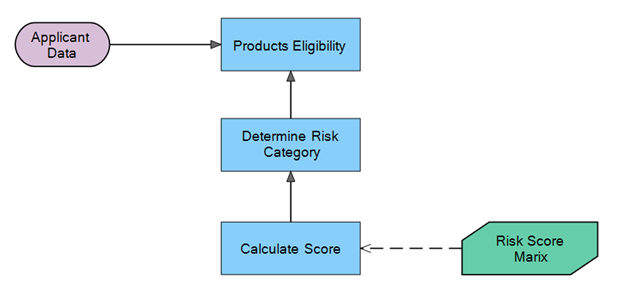
This decision model aims to filter out conflicting and irrelevant products from the customer’s view so they can decide easier on choices they have.
Next Best Action
Next-Best-Thing (Next-Best-Action, Next-Best-Conversation, Next-Best-Offer, etc.) is a token we put in front of the individual audience based on rules, data, and their engagement with the organization. It is a context-bound and situation-aware token that is delivered to channels specifically tied to the individual’s lifecycle.
Based on the individual’s engagement with it, we capture the feedback, and we can determine what is the Next-Best-Thing.
For example, in a superannuation company that manages funds for retirements, in a contact center the agent can have parallel conversations about available products, improving investment, contributing more to the fund, changing portfolio risk options, and so on.
The NBx can significantly help the audience (customer, client, member, etc.) to make a decision based on what matters to them. It reduces the space of options available to them by using decisioning technologies that leverage rules, insight, machine learning, etc.
A real 1:1 personalized engagement must be based on the NBx rather than a product push and marketing segmentation. It must be personalized more deeply than just saying “Dear [first name]”.
Regulations and Policies
Not everything is always possible from a regulatory and policy point of view. The product eligibility should include those aspects as well.
Regulated Industries
For instance, in a financial services organization that manages funds, they may not allow you to withdraw money, which is driven by regulation around superannuation funds. So these sorts of decisions are governed by law and should become part of product eligibility.
Imagine in a call center that you augment the agent conversation with Next-Best-Conversation (NBC), which enables the agent to have a proper conversation with the client. Obviously, the agent cannot offer the “Withdraw from fund” if the person is not eligible.

Organization Policies
Organization policies are also important, as they are the embodiment of the operational framework for the organization.
For instance, let's say the policy says we only offer the product to people who can afford it. Just because customers have decided to purchase a relevant product, it does not mean they can afford it. This, as you have guessed already, becomes another decision model that ensures the NBA for a product offering is aligned with the organization policy.
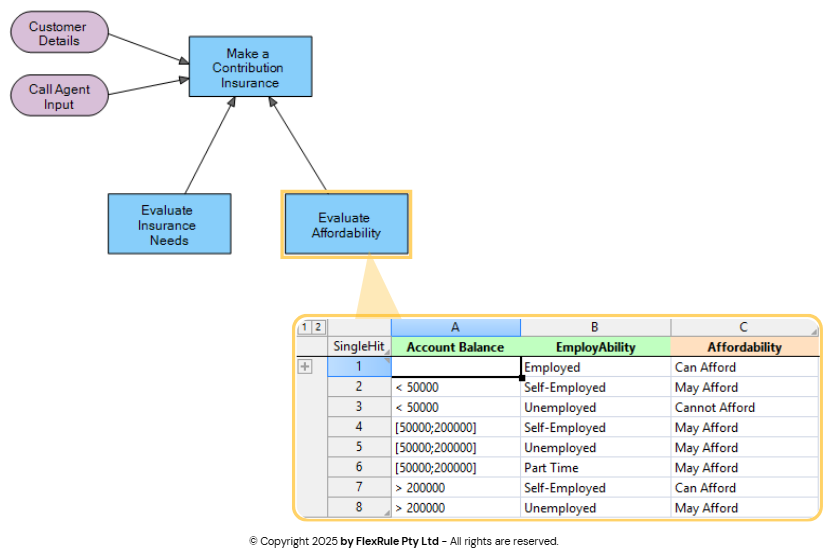
As you see in these examples, everything is a decision model. Sometimes they are driven by rules, sometimes by querying on data, and other times with some computational logic. Still, it is a decision that determines whether or not the NBA, NBC, and Next-Best Offer (NBO) is relevant to the audience based on policies and regulations.
Propensity Score
Propensity is a score that predicts the likelihood of something happening. For the next level enhancement, we can add the Propensity score to the model and let the list be sorted by the score. The intention here is to make it even easier for the user and to show them an ordered list based on what product they are more likely to select.
Imaging in a complex product and services organization, a client will be eligible for many next-best-thing,
- Which one of them are going to resonate with them better?
- Which one of them should we send it to them?
This is where the AI-powered ranking can calculate a score for all the possible next-best-thing that the individual is eligible for. It works to rank based on what has been successful or not so much in a similar context for very similar individuals. It incorporates their feedback, context, engagement, and everything we know about this individual to rank the available options based on this score.
To create this score, we need to use customers first-party data, such as:
- behavioral data,
- transactional data, and
- demographic data.
By utilizing the Machine Learning techniques and Live Reinforcement Learning, we can create a scoring model that allows you to determine the likelihood of the customer accepting a product recommendation.
Orchestration is Critical
To deliver the NBA, NBO, NBC, etc. to the channel, the solution should integrate with many systems and data sources, and:
- Execute the decision models
- Apply the AI ranking algorithm
- Push the next-best-thing to the channel
- Capture the feedback (decision or indecision)
- Integrate the feedback into the system
- …and do it all over again
This is not a standard orchestration, because not only should it execute decisions and deliver the NBx to the channels, but also it should know about situations and stages of the audience. This means it is based on what the audience’s intent is, where they are in their own lifecycle, and how they choose to engage with the organization.
This means a traditional workflow and process automation are needed to automate tasks and activities between systems and data — this is a table stake. But more importantly, stages, states, audience circumstances, and their interaction histories and feedback should drive those automated decisions and processes.

This is where the Continuous Decision Model comes into the picture. Not only does it enable capturing feedback, but also, it coordinates between multiple automated processes and decisions. The Continuous Decision Model (CDM) manages interaction history and determines what the next best step is, based on the individual's goal and states.
Book a Custom Demo
Conclusion
In this example, using a decision model for personalized engagement was a small piece of a very large scenario that requires many pieces of technology to work together seamlessly in real-time. At the core of it there are many decisions model that suggests the best products to the customer and creates alignment within teams in Products, Sales, Marketing, Data, and Analytics.
Even in many cases, a decision model will enforce the requirement of the decision model as the customer journey is not leaner and cannot be mapped out and predefined.
Reducing complexity lies not only in ensuring everything is driven by decisions to respond to customers' journey requirements in real-time but also in orchestrating all the required pieces based on a specific journey's touchpoints and customers' preferences in a demanding and competitive marketplace.
Read More

Last updated May 15th, 2026 at 09:41 am Published October 22nd, 2024 at 03:28 pm