Next Best Action (NBA) uses data, customer interactions, insights, advanced analytics, and machine learning to determine the best possible action based on similar profiles at the moment the customer is engaging. This can happen on the website, in the mobile app, or during a conversation at a branch.
Campaigns and Segments Fall Short
Campaigns and segments are not the most effective marketing approach for complex product and services organizations.
For example in a financial services context, what a customer needs depends on where they are in their lifecycle. Each stage requires different needs. Traditional segmentation cannot adapt to that level of variability; therefore, they cannot provide a true personalization other than starting the email “Dear [first name]”.
Vanity Metrics Miss the Point
On the other hand, data-driven marketing teams are obsessed with measuring. But they mostly measure the wrong actions, and optimize them with clickbait tactics. They do run experiments, A/B testing for colors, positions, etc., measuring the attractiveness of the copy and visuals with the audience.
But true personalization is when the offer is more relevant to the person receiving it. Clicks on the attractive copy and visuals are important, but if the offer is irrelevant and not purchased, are we measuring the right metrics? Even worse, are we improving what matters to the user?
Book a Custom Demo
Introducing the Next Best Action (NBA)
Next Best Action (NBA) is a decisioning strategy that leverages real-time data, customer interactions, and advanced analytics including machine learning to determine the most relevant and personalized action for each individual at the moment of engagement.
Whether the customer is browsing a website, using a mobile app, or speaking with a representative at a branch, NBA uses:
- Historical behavior and preferences
- Current context (channel, time, device, etc.)
- Similarity to other profiles
- Real-time insights and predictions using advanced analytics
…to recommend the most effective course of action.
It could be a product offer, a helpful message, a service option, or even no action at all. The goal is to choose whatever maximizes value for both the customer and the business in that moment.
This means sending a very personalized token to the user on their channels. Then, not only measuring the engagement of the audience with that token, but also the effectiveness of it:
- How relevant is it to the individual's circumstances?
- Have they chosen or selected it?
- Have they purchased it?
- Did it improve their situation?
- Did it help them achieve their goals?
- What feedback have they given us?
So it's important to understand we should not just A/B testing for impression, click rate etc. but also experimenting to find the best token that resonates with the audience's individual circumstances across channels.
What Is the Token?
The token is a prompt. The concrete instance of an NBA. That's something specific and tailored, such as:
- A targeted product recommendation
- A service offer
- A financial advice
- A conversation
- A personalized message or prompt
As we see, the concept of Next Best Action (NBA) seems like a more effective approach, focusing on sending personalized tokens to users and measuring their relevance, effectiveness and of course the impact it creates for them. By experimenting with different tokens and measuring their impact on individual customers, businesses can improve the personalization and relevance of their marketing efforts.
The personalization in marketing is inherently complex domain especially within a regulated industry such as financial services, banking and insurance that all offers, conversations, engagements etc., must be compliant. Additionally, the products, services and offers themself are not easy to sell and they are highly dependent on where the prospects and clients are on the lifecycle and their very individual life circumstances.
Therefore, decisioning combines data, insights, machine learning, rules, and orchestration execution can effectively determine the most suitable Next Best Action (NBA) token from a range of possibilities. This enables a 1:1 personalization in a deeper level than just “Dear [first name]”.
Two Approaches to NBA Implementation
There are two models in Next Best Action (NBA) when it comes to designing and implementing NBA within an organization. Both models leverage data, insights, advanced analytics, and business rules to determine and prioritize the next best actions.
What sets them apart is how they approach decisioning. That difference is what ultimately determines success or failure.
Data-Driven NBA
This approach puts lots of weight on delivering the NBA with the mix of data, insights, machine learning, rules, and orchestration execution. It all starts with the “data”.
It goes something like this:
- gather requirements from strategy.
- find the data, clean it an make it ready.
- build rules around the data
- build machine learning around the data
- build multilevel orchestration around the data and rules
- then execute and deploy!
Data-Driven NBA Model
strategy → data → decisioning → NBA
It sounds like a sensible way to decisioning in marketing personalization problem. Hence, we need deep personalization based on customer’s behavior then we start with data and tie everything around the data. Then orchestration is the execution engine to run everything end-to-end.
Explanation of Each Step:
- Strategy
Business objectives are defined, but they often remain disconnected from tactical execution. - Data
Large volumes of customer, behavioral, and transactional data are collected upfront without being shaped by strategy. - Decisioning
This is essentially the execution of the orchestration, pulling together models, rules, and data to determine the next action. However, it lacks a structured decision model, making it difficult to align with business goals. - NBA (Next Best Action)
The resulting action is selected based on patterns in the data, but without guaranteed alignment to the original strategy.
The Problem Domain
Traditional decisioning approach is a data-driven approach. Too much focus and emphasis are on the data. Then the delivery mechanism is the orchestration engine that pulls everything together.
The problem is this is a big ball of spaghetti of complexity.
The integration of multiple data and components like users' interactions, product catalogue, machine learning, rules, and orchestration without a clear “separation of concern” leads to creating a complex system. This complexity causes the difficulties in maintenance, scalability, and debugging, making it challenging to manage and optimize the complex system.
Additionally, there is a misalignment issue with the strategy as well. The challenge lies in operationalizing business strategy through data-driven mindset. The gap between strategy and data work is very big. The decisioning project led by data and technology becomes more of a data/ML/AI project that based on RAND reports, that is over 80% of these projects failed.
Decision-Centric NBA
To address the misalignment and improve the success rate to data/ML/AI projects, a business methodology and common language between business, operations and technical team are required. They together can close the insight-to-action gap.
The data-driven mindset always stuck at the layer of the insight and failed to create actions to deliver real business value.

The gap between the insight-to-action, and in the case of marketing personalization the next-best-actions can only be closed by applying the Decision Intelligence.
The Decision-Centric Approach® for marketing creates a seamless alignment from strategy to design, to campaign, and ultimately to the desired outcome. It is an outcome-driven approach that enables organizations to make optimized, customer-centric and situation-aware decisions. The key component that bridges the gap and operationalizes this alignment is decision modeling, which becomes the core foundation that translates strategy into the next best actions (NBAs).
Additionally, by leveraging the Decision-Centric Approach®, the first step is to model business decisions explicitly. This not only operationalizes the strategy, but also provides a framework for using advanced analytics, including machine learning, in a way that ensures they deliver business value. It also helps prevent failure by clarifying stakeholder roles and aligning everyone with the purpose of the project and advanced technologies such as AI.
Decision-Centric NBA Model
strategy → decision frames → decision models → data by decision → decision execution → NBA
Explanation of Each Step:
- Strategy
Business goals and desired outcomes are clearly defined and used as the starting point. - Decision frame
A Decision Frame sets the structured context for strategic decisions. It defines what is needed, what they aim to achieve, and how they will be supported by operational and tactical decisions that generate actions shaped by events, constraints, and available resources. - Decision modeling
The strategic decisions are translated into a set of operational and tactical decisions modeled using the open standard (DMN). This establishes a common language across teams and brings clarity and transparency to how decisions are made. - Data by decision
The decision logic determines what data is needed and when. Data is not collected up front but is pulled contextually based on decision requirements. - Decision execution
The logic is executed using only the data it needs. This is the runtime decisioning step that aligns directly with strategy and context. - NBA (Next Best Action)
The output is a specific, tailored action that is relevant to the user’s situation and aligned with business intent.
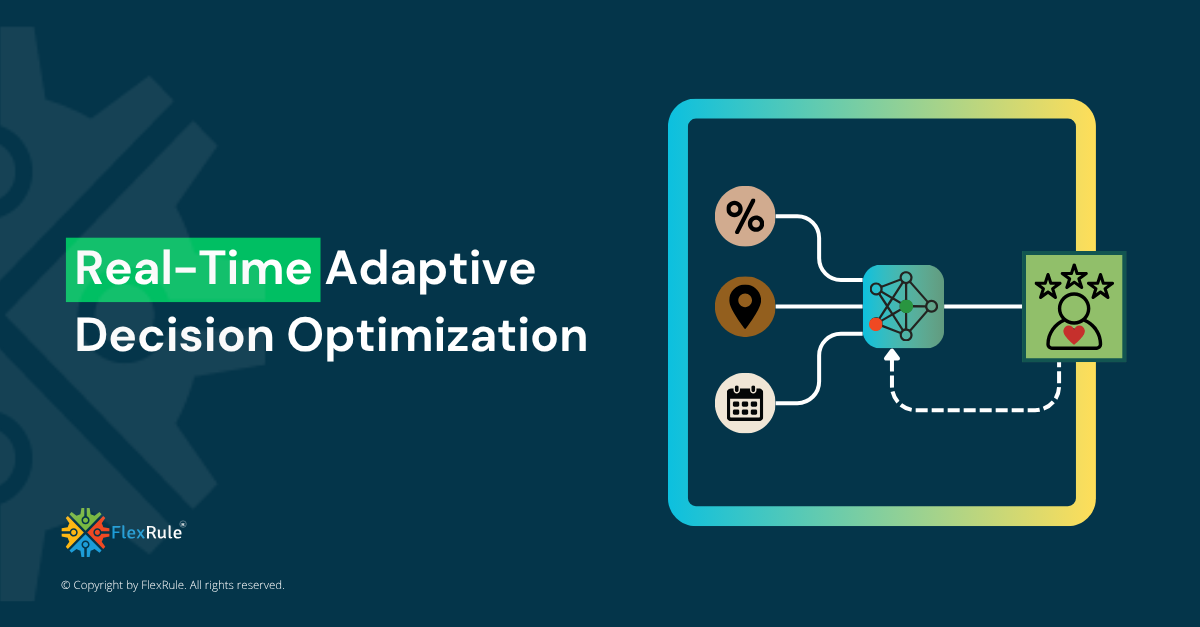
Creating and delivering the NBA is not the end of the process. The fact is, great decisions aren't static; they flex over time. That’s where the Continuous Decision Model comes into play. It captures feedback on each next best action. Whether it was accepted or not, it feeds that information, user response, and how it resonates with clients back into a continuous feedback loop. Then, the adaptive AI capability uses this feedback to ensure there’s no disconnect between changing circumstances, conditions, and the NBAs that go to the client.
Final Thoughts
Next Best Action (NBA) is essential for marketing in organizations offering complex products and services. Traditional campaign-based and segment-driven approaches fall short when customer needs vary by lifecycle stage and context. Measuring surface-level engagement like clicks and impressions without tying them to outcomes leads to shallow personalization.
NBA shifts the focus to what truly matters: delivering specific, relevant actions that help each user progress in their journey. Whether driven by data or by decision models, NBA allows marketing teams to move beyond assumptions and toward actions that are explainable, measurable, and aligned with business goals.
The traditional NBA model that is data-driven:
- Will be misaligned with strategy most of the times (Almost 90% of decisioning projects)
- Relies on the technical team to build, deliver, maintain a very complex system
- It becomes very expensive and difficult to scale and grow NBAs in decisioning project
- NBAs become data projects rather than being driven by strategy and business decisions.
- There will be no clarity and transparency on why behind the NBAs delivery
To be effective, NBA must be more than a technical layer. It must be strategy-aligned, situation-aware, and context-sensitive based on decisions.
In this, the Decision-Centric Approach® stands out by turning strategy into a clear and transparent decision model where every member of team understands and can collaborate.
This approach makes business decisions the first-class citizens of organizations. It ensures the decision models:
- Drive what data is needed. Data by decisions, not data for decisions.
- Determine NBAs based explicit decision models driven by strategy that ensures alignment
- Establish common language where every team member is clear about why and how
- Guarantee clarity and transparency
- Serve as the basis for measuring the real success metrics
- Leverage an outcome-driven approach to delivering real impact
- Focus on business outcomes backed by decision models connected to strategy
The result is a participatory approach where strategy becomes operational through explicit decision models ensuring clarity and transparency in delivering real business value and impact.
Read More

Last updated May 15th, 2026 at 09:40 am Published July 25th, 2025 at 04:28 pm